
Vrijeme: 14:57
Četverodimenzionalna komba | 4D Combinatorics #5
Karlo je zatim počeo razmišljati kako bi cijelom ovom dubokoumnom lancu htio dati poučan završetak i podučiti čitatelja kako rješavati olimpijske zadatke koristeći 4D prostor. Puno stvari u životu može biti simulirano u 4D (n-D) prostoru. Naprimjer, četveroznamenkasti pin može biti prikazan kao  hiperkocka (uzevši u obzir da uubacujemo znamenke od
  do
do  ). Naravno, kompleksni kombinatorni zadatci se uglavnom olakšaju kad se vizualiziraju (misli IMO 2024 P3). Jedan problem koji showcasea ovu ideju (i u duhu je ovog lanca) je sljedeći:
hiperkocka (uzevši u obzir da uubacujemo znamenke od do ). Naravno, kompleksni kombinatorni zadatci se uglavnom olakšaju kad se vizualiziraju (misli IMO 2024 P3). Jedan problem koji showcasea ovu ideju (i u duhu je ovog lanca) je sljedeći:Uzmimo sve djeljitelje nekog  i poredajmo ih u niz tako da vrijedi da je barem jedan od
  ili
ili  prost broj. Dokaži da je za bilo koji moguće tako poredati djelitelje (naprimjer, niz
  ne radi, ali
  ) radi.
Kad si dokazao ovo (a stvarno je cool dokaz ako koristiš n dimenzija), kao odgovor na ovo pitanje napiši "ok".
Karlo then began thinking about how he could give a meaningful conclusion to this deep chain of thoughts and teach the reader how to solve olympiad-style problems using 4D space. Many things in life can be simulated in 4D (or n-dimensional) space. For example, a four-digit PIN can be represented as a  hypercube (taking into account that we insert digits from 0 to 9). Naturally, complex combinatorial problems are often easier to tackle when visualized (think IMO 2024 P3).
hypercube (taking into account that we insert digits from 0 to 9). Naturally, complex combinatorial problems are often easier to tackle when visualized (think IMO 2024 P3).One problem that showcases this idea (and is in the spirit of this chain) is the following:
Consider all the divisors of a positive integer  , and arrange them in a sequence such that for each consecutive pair
  , at least one of the ratios
 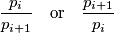 is a prime number. Prove that it is always possible to arrange the divisors of any in such a sequence.
Example. The sequence  does not work, but
  does.
does.
As the answer to this question, input "ok".